





Did you buy or lease a defective vehicle in Woodland Hills?
At Goldberg Injury Lawyers, we provide lemon law representation for Woodland Hills drivers whose vehicles keep returning to the service department.
If your new vehicle has gone back to the dealership for the same defect more than once, you may be entitled to a replacement or a refund from the manufacturer. That obligation belongs to the manufacturer, and manufacturers often contest whether a particular vehicle qualifies.
Our Woodland Hills, CA lemon law lawyer reviews the repair orders, identifies the defect the manufacturer failed to correct, and pursues the remedy California law provides. At Goldberg Injury Lawyers, our founder has practiced law in California since 1984. Contact our office to schedule a free consultation.
Lemon Law Lawyer Woodland Hills, CA
Los Angeles County recorded 7,767,206 fee-paid vehicle registrations in 2025, according to DMV registration data. County residents with a dealer or manufacturer dispute can also file a complaint or request mediation at no cost through the county’s consumer affairs department.
A lemon law attorney in Woodland Hills, CA represents the buyer or lessee of a defective vehicle in a claim against the manufacturer. The claim rests on the manufacturer’s written warranty. When the manufacturer and its dealers cannot repair a covered defect after a reasonable number of attempts, the manufacturer must replace the vehicle or return the purchase price under Civil Code section 1793.2. Our work is to document that failure and hold the manufacturer to the obligation.
Types of Lemon Law Cases We Handle in Woodland Hills
Every lemon law claim requires the same core proof: a defect covered by the warranty that the manufacturer did not repair. The vehicles and disputes below are the matters our Woodland Hills lemon law attorney handles. Each one calls for a different set of records.
- Engine and transmission defects. Stalling, hard shifting, excessive oil consumption, and loss of power commonly bring a vehicle back to the service department. We collect each repair order and compare the complaint the owner reported with the work the dealer recorded.
- Electrical and software failures. Display screens that fail, backup cameras that fail, and driver-assistance features that shut off can support a claim when the warranty covers them. Dealers often address these faults with a software update. We track whether the same fault returned after each one.
- Electric and hybrid vehicle defects. Battery degradation, charging faults, and sudden range loss raise warranty questions specific to these vehicles, and battery coverage often has its own terms, separate from the basic warranty.
- Brake and steering problems. California law treats a defect that endangers the driver differently from one that affects comfort or convenience, and fewer repair attempts may be required before the manufacturer’s obligation arises.
- Airbag accidents. An airbag that fails to deploy in a collision gives rise to an injury claim against the manufacturer. If the airbag warning light also returned after each repair, a lemon law claim may exist alongside the injury claim, and our firm handles both.
- Leased vehicles. The lemon law protects lessees as well as buyers. When a leased vehicle qualifies, the remedy accounts for the payments already made and the balance owed to the leasing company.
- Demonstrator and dealer-owned vehicles. A demonstrator sold with the manufacturer’s new-vehicle warranty can qualify under the same rules as a new car. We confirm the warranty language in the sales contract before evaluating the claim.
- Motorhome defects. Claims involving motorhomes depend on which component failed, because the driving components and the living quarters are treated differently. We sort each repair by component first.
- Disputed repurchase offers. Some manufacturers acknowledge the defect but offer a buyback that omits collateral charges or applies a larger mileage deduction than the records support. We recalculate the figures from the purchase contract and repair history and respond to the manufacturer in writing.
Why Choose Goldberg Injury Lawyers as My Lemon Law Lawyer in Woodland Hills, CA?
Trial and Arbitration Record Since 1984
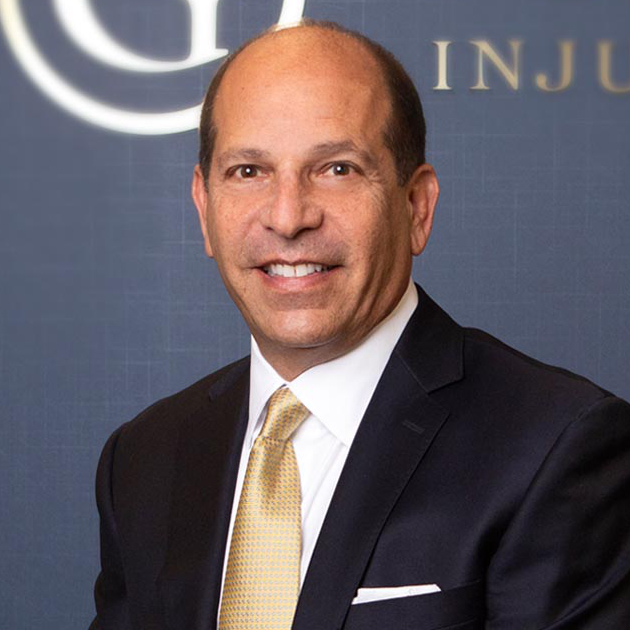
Barry P. Goldberg earned his undergraduate degree at UCLA and his law degree at Loyola Law School in 1984. His admissions include the Ninth Circuit Court of Appeals and the United States Supreme Court.
Many manufacturer disputes resolve through arbitration programs or mediation before trial. Mr. Goldberg has handled hundreds of arbitrations and mediations, and he wrote a published article on arbitration practice for The Advocate, published by CAALA. He grew up in the Woodland Hills and Tarzana area, and he has practiced as a personal injury lawyer in Woodland Hills, CA since founding the firm in 2005.
Results and Recognition
Our firm has helped clients recover millions of dollars. Mr. Goldberg’s record includes:
- Recoveries for clients with brain injuries, spinal injuries, and fractures
- Numerous jury trials, along with matters argued before the California Court of Appeal and the Ninth Circuit
- Service as a volunteer mediator and CRASH settlement officer for the Los Angeles Superior Court
Super Lawyers has selected him each year since 2012 and named him to its Top 100 list for Southern California in 2021. He holds a 10 “Superb” rating from Avvo, a 10 Best award, and he served as 2020 president of the San Fernando Valley Bar Association. Fee arrangements are explained at the consultation, before you make any decision.
What Is Important to Understand About a Lemon Law Case?
Damages, Liability, and Compensation for Lemon Law Cases
Liability rests with the manufacturer, because the manufacturer issued the warranty. Negligence is not part of the analysis. The question is whether a covered defect remained after the manufacturer had a reasonable opportunity to repair it.
The remedies available under the Song-Beverly Consumer Warranty Act include:
- Restitution. A refund of the price paid or payable, including collateral charges such as sales tax and registration fees, minus a deduction for the miles driven before the first repair visit for the defect.
- Replacement. A substantially identical vehicle. The buyer may choose restitution instead.
- Incidental damages. Reasonable towing, rental car, and repair costs the owner actually incurred.
- Civil penalty. Up to two times the actual damages when the manufacturer’s violation was willful, under Civil Code section 1794.
- Attorney fees and costs. A buyer who prevails may recover reasonable attorney fees and costs from the manufacturer.
A defect that causes a collision creates a second claim. Airbag failures and seat belt defects are two examples. Those injury claims follow personal injury rules and are valued separately from the warranty claim.
What Are Important Aspects of a Lemon Law Case?
Lemon law claims depend heavily on documentation. Four matters warrant attention from the first service visit forward.
- Repair orders. Each visit should produce a written order showing the complaint, the date, and the mileage. An order marked “could not duplicate” still documents that the vehicle was presented for repair. Work performed under a vehicle recall belongs in the same file.
- The warranty terms. Basic, powertrain, battery, and emissions warranties carry different durations, and the applicable one determines both coverage and timing.
- Manufacturer arbitration. Many manufacturers sponsor an arbitration program certified by the California Department of Consumer Affairs. A decision binds the manufacturer only if the consumer accepts it. A consumer who rejects it may still pursue the claim in court.
- Which procedures apply. Some manufacturers elected to follow new lemon law procedures that took effect in 2025, while others remain under the prior rules. The difference affects notice requirements and filing deadlines.
What Is The Lemon Law Case Timeline?
The filing deadline depends on the manufacturer. For manufacturers that opted into the 2025 procedures, a lawsuit must be filed within one year after the applicable warranty expires, and no later than six years after the vehicle was first delivered, under section 871.21 of the Code of Civil Procedure. For other manufacturers, claims are generally subject to the four-year limitation period for breach of warranty.
Most matters move through these stages, and many resolve before trial:
- Repair visits and collection of every service record
- Written notice to the manufacturer, which must precede any claim for civil penalties when the manufacturer has opted into the 2025 procedures
- The manufacturer’s response: a repurchase offer, another repair attempt, or a denial, followed by settlement negotiations
- Arbitration or mediation
- Civil litigation if the claim does not resolve, including written discovery and depositions
What Should You Bring to Your Lemon Law Consultation?
Bring the records you have, even if the file is incomplete. Missing repair orders can be requested from the dealership.
- The purchase or lease contract
- Every repair order and service invoice
- The warranty booklet
- Letters and emails exchanged with the manufacturer or dealer
- Recall notices, or a printout from the NHTSA recall lookup
At the consultation, we review the documents with you and explain whether the repair history supports a claim. If the records do not support a lemon law claim, we will say so at that meeting.
Reach Out to Goldberg Injury Lawyers to Schedule a Consultation
Goldberg Injury Lawyers offers free consultations for lemon law matters and explains any fee arrangement before you decide how to proceed. Our office returns calls and messages promptly. Contact us to schedule a review of your vehicle’s repair history. Our Woodland Hills lemon law lawyer will explain the remedy that fits your situation and the deadline that applies to your manufacturer.


